Just one more reason to not take climate hysteria seriously.
Category Archives: Technology and Society
Mars
What we need to know before we send people there. And they don’t even discuss the gravity issue.
[Update a few minutes later]
Eric Berger says that Elon is between a rocket and a hard place. I don’t think that taxpayer money should to go build giant rockets, whether by SpaceX or Boeing.
Cryonics
A very nice, but long piece on the current state of the art, over at Gizmodo.
Twitter Censorship
Yes, “keep driving” would have been a better formulation, but as he says, it’s Twitter. I’ve also noticed that these suspension seem to be entirely one sided:
They tell users and investors that they don’t censor, but they seem awfully quick to suspend people on one side of the debate and, as people over at Twitchy note, awfully tolerant of outright threats on the other.
Not that I’m trying to be, but I’m a little surprised that I’ve never had a problem. Yet.
[Update a few minutes later]
Here’s the story from Legal Insurrection.
I'm guessing that Glenn didn't actually do what they say he did. https://t.co/yPkHO2ykAX
— Deplorable-In-Chief (@Rand_Simberg) September 22, 2016
#ProTip: Killing someone in self defense when caught in the middle of a riot is not "murder." https://t.co/PS424ZoUY7
— Deplorable-In-Chief (@Rand_Simberg) September 22, 2016
[Update a while later]
More thoughts from Nick Gillespie. I think I can guess what Glenn’s next USA Today column will be about.
[Update late morning]
Aaaaaand, the administration at the University of Tennessee reveal themselves to be asshats.
[Update mid-afternoon]
Here’s the story from PJMedia.
Hacker-Proof Code
…through formal software verification. This seems like sort of a big deal. Particularly in the era of the Internet of Things and self-driving cars. Of course, the weakest link in security will remain the flawed unit between the seat and the keyboard.
The “Lone Wolf” Lie
Without it, we could have prevented almost every attack.
The New Space Race
An interesting article, from my local paper, about the renaissance of aerospace in southern California in general and the South Bay in particular. Not sure Interorbital should be included in the list, though.
Microsoft’s Cancer Cure
Derek Lowe isn’t impressed.
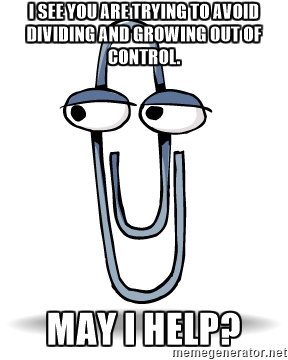
@Rand_Simberg @Dereklowe @Eaterofsun Maybe they could just install Windows 10 into the tumors?
— Tech_Noir (@LV__666) September 21, 2016
XKCD And Climate
I’m generally a big fan of Randall Monroe, but I thought his latest was a misfire. This is a more accurate take.
Tomorrow’s Mars Hearing
If I were Chris Carberry, I’d be outraged at this, instead of promoting it. None of those people or companies are going to get anyone to Mars. But they’ll spend billions pretending they will.